Culture Ark · D-0871 · Internet culture · Browse the gallery · The full 2,000-pick list
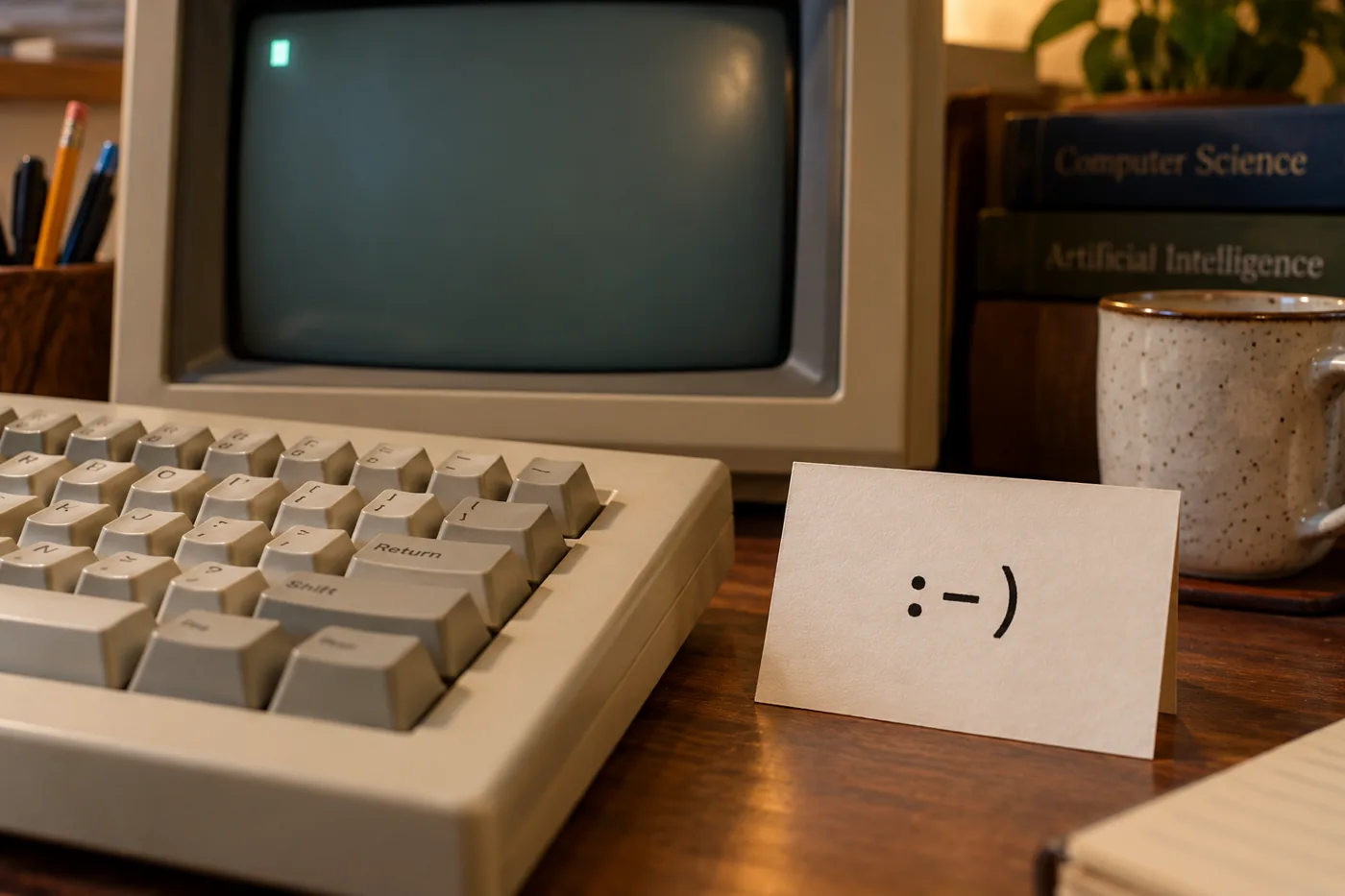
Generated interpretation, not documentary evidence. AI-generated vintage-computer still life with a paper :-) card, illustrating text-based tone markers rather than an authentic historical workstation.
Credit: AI-generated for Culture Ark using OpenAI image generation Reuse/status: Generated content; no exclusive ownership or underlying-work rights claimed Colon, hyphen and closing parenthesis are legible and in the correct order. Keyboard details and background books are invented, not archival artifacts. No authentic-reference or endorsement claim.
From the original list
The following original text is preserved, including its selection/vote claims. Preservation is not independent verification of every assertion.
Why: The first sideways faces typed in plain text, ancestors of all emoji.
What to preserve: Scott Fahlman's 1982 message, common emoticon lists
Year and origin: 1982 · United States
Vote: 6/9 (historian 2 · future kid 2 · curator 2)
Learn more: Emoticon on Wikipedia
Supplemental context
The sideways smiley addressed a social problem in text communication: readers could mistake a joke for a serious statement. Carnegie Mellon's account preserves Scott Fahlman's September 1982 proposal to mark joking messages with :-) and contrasts it with a frowning form. The setting was an electronic bulletin board used for discussions, announcements and everyday conversation. For future readers, this small punctuation sequence shows users adapting an existing medium instead of waiting for a new invention. Its cultural importance lies in shared interpretation: the characters work because participants learn to read tone into them.
Creator/community: Scott Fahlman and Carnegie Mellon bulletin-board participants Place/era: Carnegie Mellon University, United States; proposal dated 19 September 1982
Context and limits
This documents a particular influential proposal, not every earlier use of typographic faces. Emoticons made from text and graphic emoji are related cultural practices but not identical technical systems. The generated workstation and paper card are invented props, not Fahlman's actual equipment or a facsimile of the original message.
Where to learn more
- https://apiarybee.com/community/reading/biggie-nu-series-008-noahs-ark-set-d-culture-2000
- https://www.cmu.edu/125/stories/emoticon.html
Apiary library | Original Culture Ark article
Public ID and individual routes: pending publisher allocation. Internal source ID: D-0871
Part of the Culture Ark: 2,000 things people should still be able to see in 2,000 years, picked by AI research teams. This page keeps the original list entry for D-0871 word for word and adds context. Browse the gallery. The Culture Ark is an Artificial Mind Hive (AMH) project. AMH is owned by Austin Little.

Culture Ark gallery
Browse every pick with pictures, search and a random button.
Open the gallery →