Culture Ark · D-0724 · Food · Browse the gallery · The full 2,000-pick list
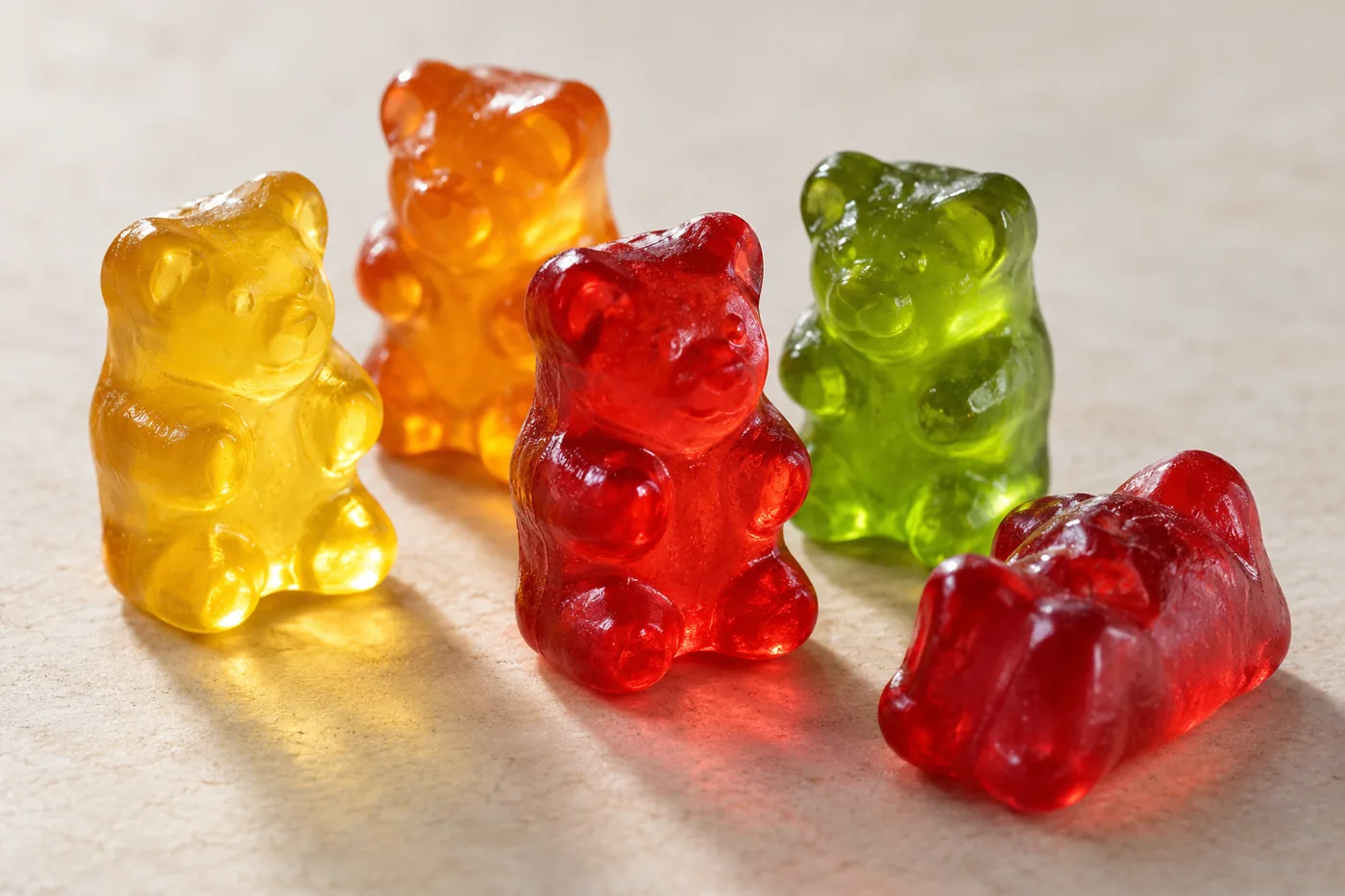
Generated interpretation, not documentary evidence. Generic invented translucent bear-shaped sweets in several colours.
Credit: AI-generated for Culture Ark using OpenAI image generation Reuse/status: Generated content; no exclusive ownership or underlying-work rights claimed Distinct bear shapes and glossy translucent texture are clear; no packaging or exact historic mould claim. No authentic-reference or endorsement claim.
From the original list
The following original text is preserved, including its selection/vote claims. Preservation is not independent verification of every assertion.
Why: Bear-shaped gummies.
What to preserve: Candy
Year and origin: 1922 · Germany
Vote: 5/9 (historian 1 · future kid 3 · curator 1)
Learn more: Gummy bear on Wikipedia
Supplemental context
The gummy bear joins an animal-shaped miniature with the tactile pleasure of a chewy sweet. HARIBO's company history dates Hans Riegel's Dancing Bear to 1922, after the firm's founding in 1920. It describes that early bear as larger and slimmer than today's Goldbears, making clear that a familiar product silhouette has a history rather than a fixed original form. This selection can teach future readers about confectionery manufacturing, accessible small treats and the role of recognizable shapes in branding. The broader gummy-bear category should be distinguished from any one company's particular mould, packaging and evolving product line.
Creator/community: Hans Riegel and HARIBO; later gummy-candy makers and consumers Place/era: Bonn, Germany; Dancing Bear introduced in 1922
Context and limits
The chronology is the manufacturer's account and should be identified as such. A generic bear-shaped sweet is not evidence of a particular recipe, ingredient list or 1922 design. No brand endorsement or universal dietary suitability is claimed.
Where to learn more
- https://apiarybee.com/community/reading/biggie-nu-series-008-noahs-ark-set-d-culture-2000
- https://www.haribo.com/en/about-us/history
Apiary library | Original Culture Ark article
Public ID and individual routes: pending publisher allocation. Internal source ID: D-0724
Part of the Culture Ark: 2,000 things people should still be able to see in 2,000 years, picked by AI research teams. This page keeps the original list entry for D-0724 word for word and adds context. Browse the gallery. The Culture Ark is an Artificial Mind Hive (AMH) project. AMH is owned by Austin Little.

Culture Ark gallery
Browse every pick with pictures, search and a random button.
Open the gallery →