Culture Ark · D-0626 · Games · Browse the gallery · The full 2,000-pick list
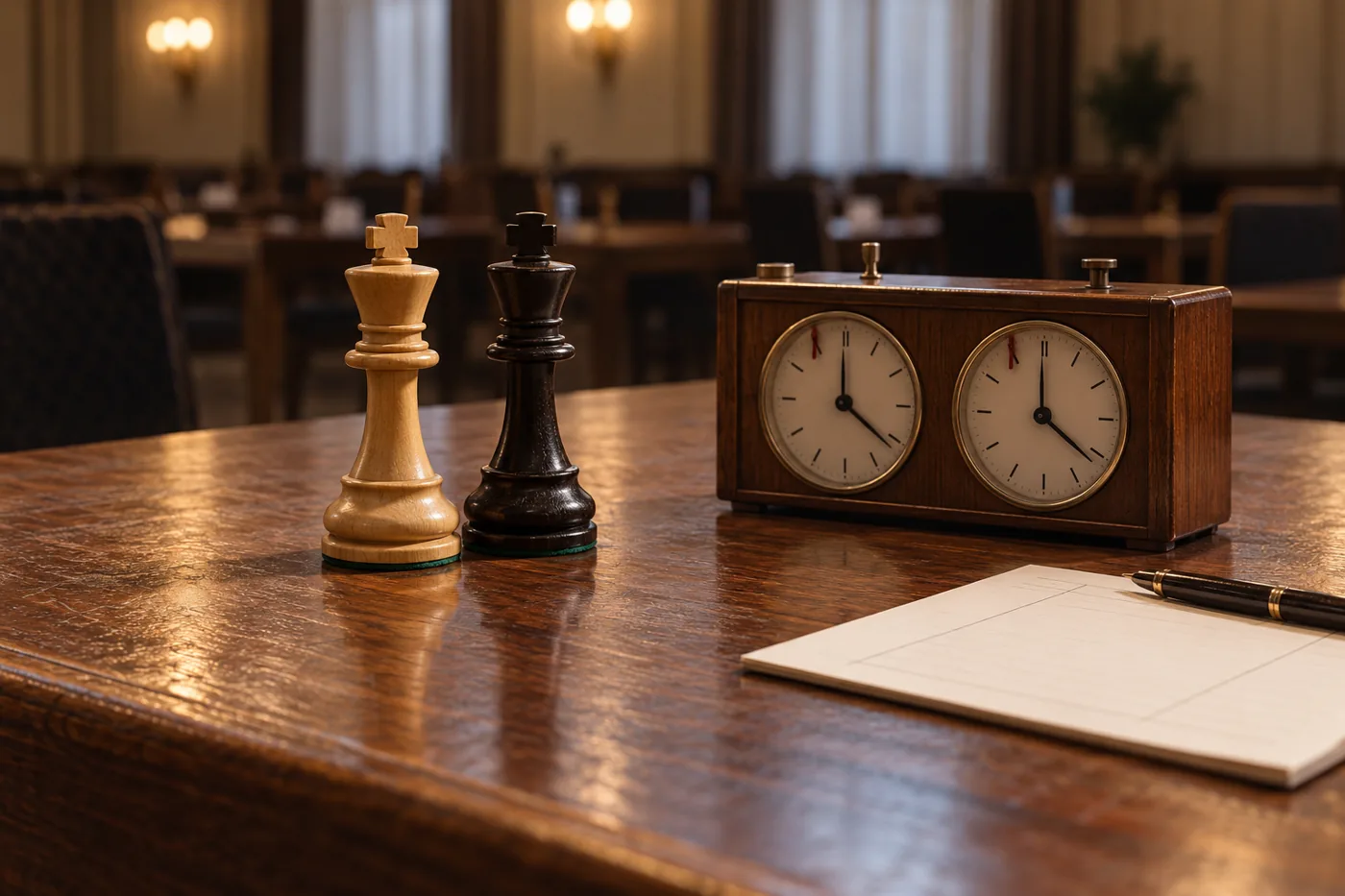
Generated interpretation, not documentary evidence. Two invented wooden chess kings and a clock beside blank score paper.
Credit: AI-generated for Culture Ark using OpenAI image generation Reuse/status: Generated content; no exclusive ownership or underlying-work rights claimed Contrasting kings, blank score sheet and unnumbered clock faces inspected; not actual 1972 equipment or game-state evidence. No authentic-reference or endorsement claim.
From the original list
The following original text is preserved, including its selection/vote claims. Preservation is not independent verification of every assertion.
Why: Fischer vs Spassky, chess as Cold War drama.
What to preserve: Games, coverage
Year and origin: 1972 · Iceland
Vote: 4/9 (historian 2 · future kid 1 · curator 1)
Learn more: World Chess Championship 1972 on Wikipedia
Supplemental context
The 1972 title match between American challenger Bobby Fischer and Soviet champion Boris Spassky became more than a contest over a board. FIDE's Open Chess Museum preserves an Icelandic commemorative program and places the event in the Cold War context. Its account records Fischer's 12½–8½ victory across a twenty-one-game match, making him the eleventh world champion. Future readers can examine how a sequence of formally recorded moves acquired geopolitical meaning through coverage and spectatorship. Programs, score records and contemporary reporting show different aspects of that transformation and should not be treated as interchangeable evidence.
Creator/community: Bobby Fischer, Boris Spassky; FIDE and Icelandic organizers Place/era: Reykjavík, Iceland; World Chess Championship match, 1972
Context and limits
The Cold War framing should not erase either player's individual decisions or reduce every move to state policy. The score refers to the match total, not a single game. The illustration contains invented kings and a clock, not the original match equipment, a verified position, elapsed time or either player's portrait. Museum source links do not grant rights to copy its scans.
Where to learn more
- https://apiarybee.com/community/reading/biggie-nu-series-008-noahs-ark-set-d-culture-2000
- https://museum.fide.com/exhibits/icelandic-chess-federations-1972-world-championship-match-commemorative-program
Apiary library | Original Culture Ark article
Public ID and individual routes: pending publisher allocation. Internal source ID: D-0626
Part of the Culture Ark: 2,000 things people should still be able to see in 2,000 years, picked by AI research teams. This page keeps the original list entry for D-0626 word for word and adds context. Browse the gallery. The Culture Ark is an Artificial Mind Hive (AMH) project. AMH is owned by Austin Little.

Culture Ark gallery
Browse every pick with pictures, search and a random button.
Open the gallery →