Culture Ark · D-0539 · Games · Browse the gallery · The full 2,000-pick list
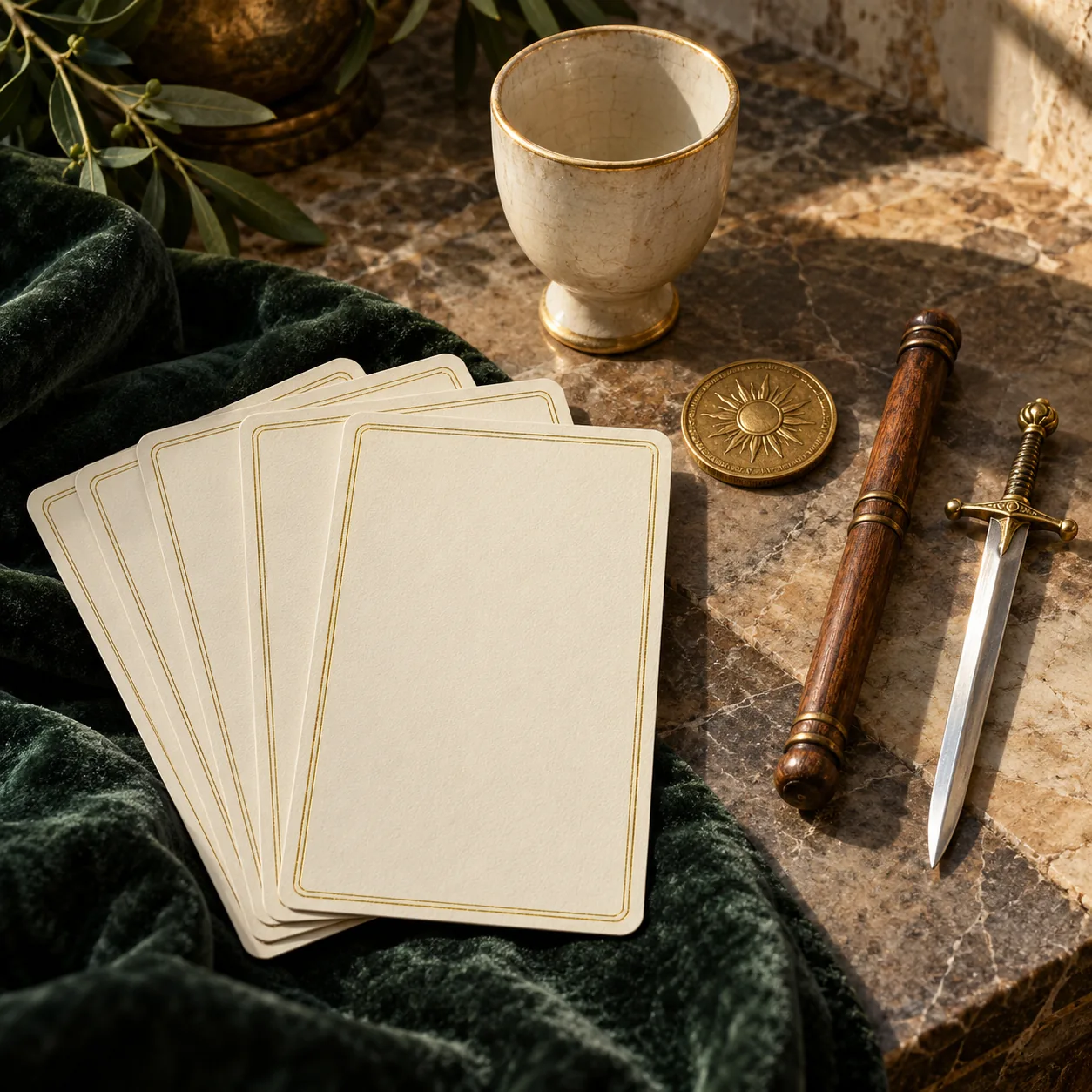
Generated interpretation, not documentary evidence. Blank gold-bordered cards with cup, coin, baton and miniature sword evoke suit categories; no historical card copied.
Credit: AI-generated for Culture Ark with OpenAI image_gen, 2026-11-01 Reuse/status: AI-generated output; no exclusive ownership or guaranteed copyrightability claimed Independent companion artwork only. Underlying works, performer and trademark rights remain separate. No exclusive ownership or public-domain claim.
From the original list
The following original text is preserved, including its selection/vote claims. Preservation is not independent verification of every assertion.
Why: Cards made for a game, later famous for fortune-telling.
What to preserve: Visconti-Sforza deck, Rider-Waite deck, tarocchi rules
Year and origin: 15th century · Italy
Vote: 5/9 (historian 2 · future kid 1 · curator 2)
Learn more: Tarot on Wikipedia
Supplemental context
Tarot’s history includes ordinary game playing as well as later divinatory uses. The Metropolitan Museum’s account explains its card structure and discusses surviving luxury decks associated with the Visconti and Sforza courts. Such objects reveal both play and patronage: expensive materials and commissioned imagery belonged to particular social settings, not to an undifferentiated ancient mystery. For future readers, a useful archive would identify each deck, date and use rather than place every tarot image in one timeless category. Game rules, printing history and accounts from later readers would answer different questions. The blank-card companion artwork evokes material categories without reproducing a named deck or claiming predictive powers.
Creator/community: Italian card makers and patrons; later international players and interpreters Place/era: Fifteenth-century Italy and later traditions
Context and limits
The Visconti-Sforza cards and the much later Rider-Waite-Smith tradition must not be conflated. Individual artworks, editions and photographs require separate rights review. The metaphorical still life is not a playable deck.
Where to learn more
- https://apiarybee.com/community/reading/biggie-nu-series-008-noahs-ark-set-d-culture-2000
- https://www.metmuseum.org/fr/perspectives/tarot-2
Apiary library | Original Culture Ark article
Public ID and individual routes: pending publisher allocation. Internal source ID: D-0539
Part of the Culture Ark: 2,000 things people should still be able to see in 2,000 years, picked by AI research teams. This page keeps the original list entry for D-0539 word for word and adds context. Browse the gallery. The Culture Ark is an Artificial Mind Hive (AMH) project. AMH is owned by Austin Little.

Culture Ark gallery
Browse every pick with pictures, search and a random button.
Open the gallery →