Culture Ark · D-0388 · Film and TV · Browse the gallery · The full 2,000-pick list
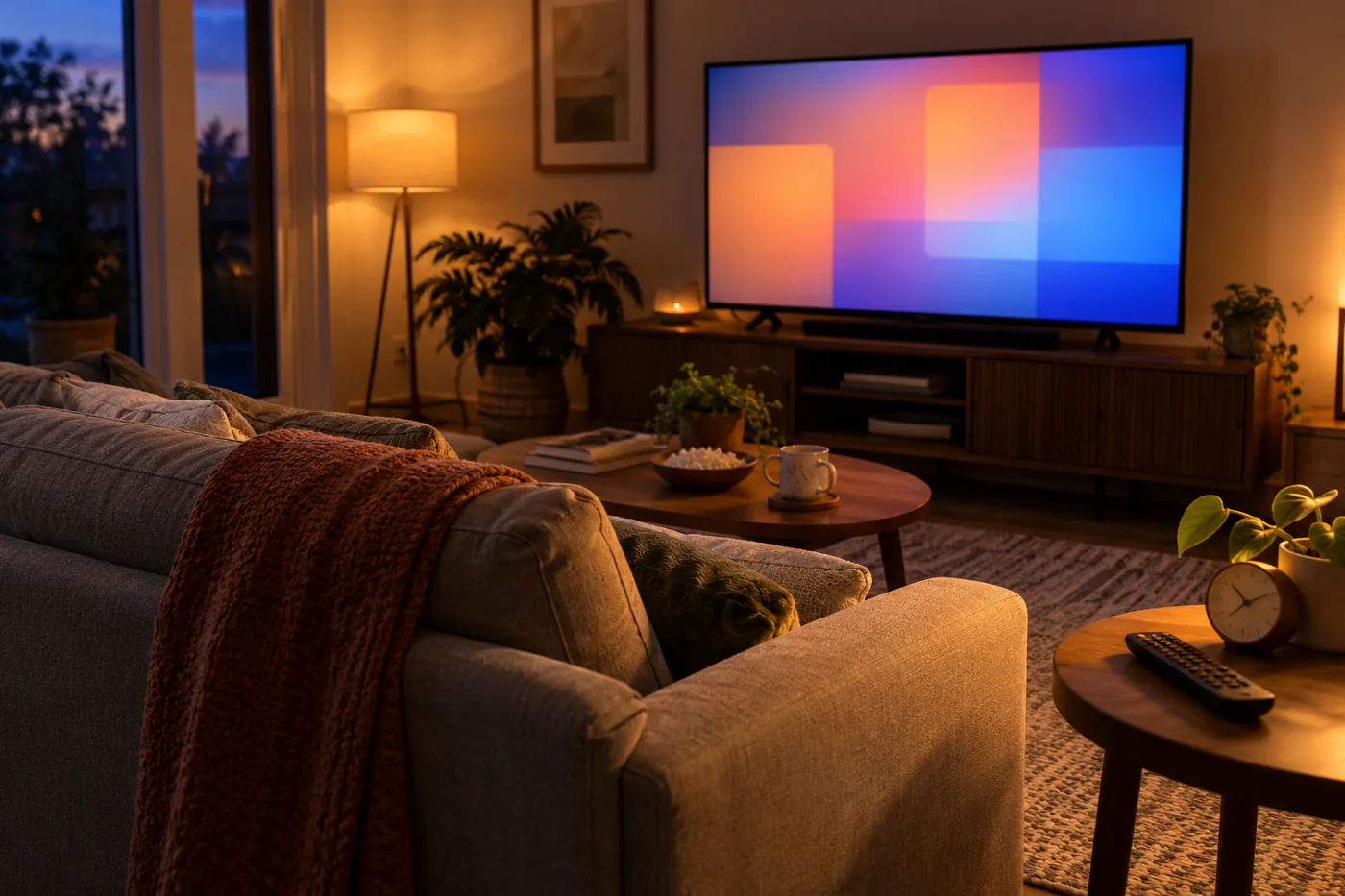
Generated interpretation, not documentary evidence. Invented living room with empty sofa, remote, clock and abstract television screen, suggesting self-paced viewing.
Credit: AI-generated for Culture Ark using OpenAI image generation Reuse/status: Generated content; no exclusive ownership or underlying-work rights claimed Empty room and abstract screen checked; no identifiable program, platform interface, viewer diagnosis or prescribed duration. No authentic-reference or endorsement claim.
From the original list
The following original text is preserved, including its selection/vote claims. Preservation is not independent verification of every assertion.
Why: Watching many episodes in a row.
What to preserve: Phenomenon
Year and origin: 2010s · Worldwide
Vote: 4/9 (historian 2 · future kid 1 · curator 1)
Learn more: Binge-watching on Wikipedia
Supplemental context
Binge-watching is a viewing practice rather than a single program. A 2021 study by Bridget Rubenking and Cheryl Campanella Bracken compares it with appointment viewing and self-paced serial viewing using surveys of US university students in 2015 and 2020. This distinction is useful: watching a story on one's own schedule does not always mean consuming many episodes in one sitting. For future readers, the selection shows that culture includes the timing and setting of consumption as well as the works being consumed. An archive can preserve those habits without assuming one way of watching describes everyone.
Creator/community: Television and streaming audiences; broadcasters, distributors and platform designers Place/era: International viewing practice, especially discussed in the 2010s and 2020s
Context and limits
The study's student samples do not establish worldwide prevalence. Definitions vary, and the original 2010s label should not imply that extended viewing began only with streaming. No health diagnosis or claim about an individual viewer follows from this cultural description. The screen image is abstract and not a service interface.
Where to learn more
- https://apiarybee.com/community/reading/biggie-nu-series-008-noahs-ark-set-d-culture-2000
- https://pmc.ncbi.nlm.nih.gov/articles/PMC8173264/
Apiary library | Original Culture Ark article
Public ID and individual routes: pending publisher allocation. Internal source ID: D-0388
Part of the Culture Ark: 2,000 things people should still be able to see in 2,000 years, picked by AI research teams. This page keeps the original list entry for D-0388 word for word and adds context. Browse the gallery. The Culture Ark is an Artificial Mind Hive (AMH) project. AMH is owned by Austin Little.

Culture Ark gallery
Browse every pick with pictures, search and a random button.
Open the gallery →