Culture Ark · D-0344 · Film and TV · Browse the gallery · The full 2,000-pick list
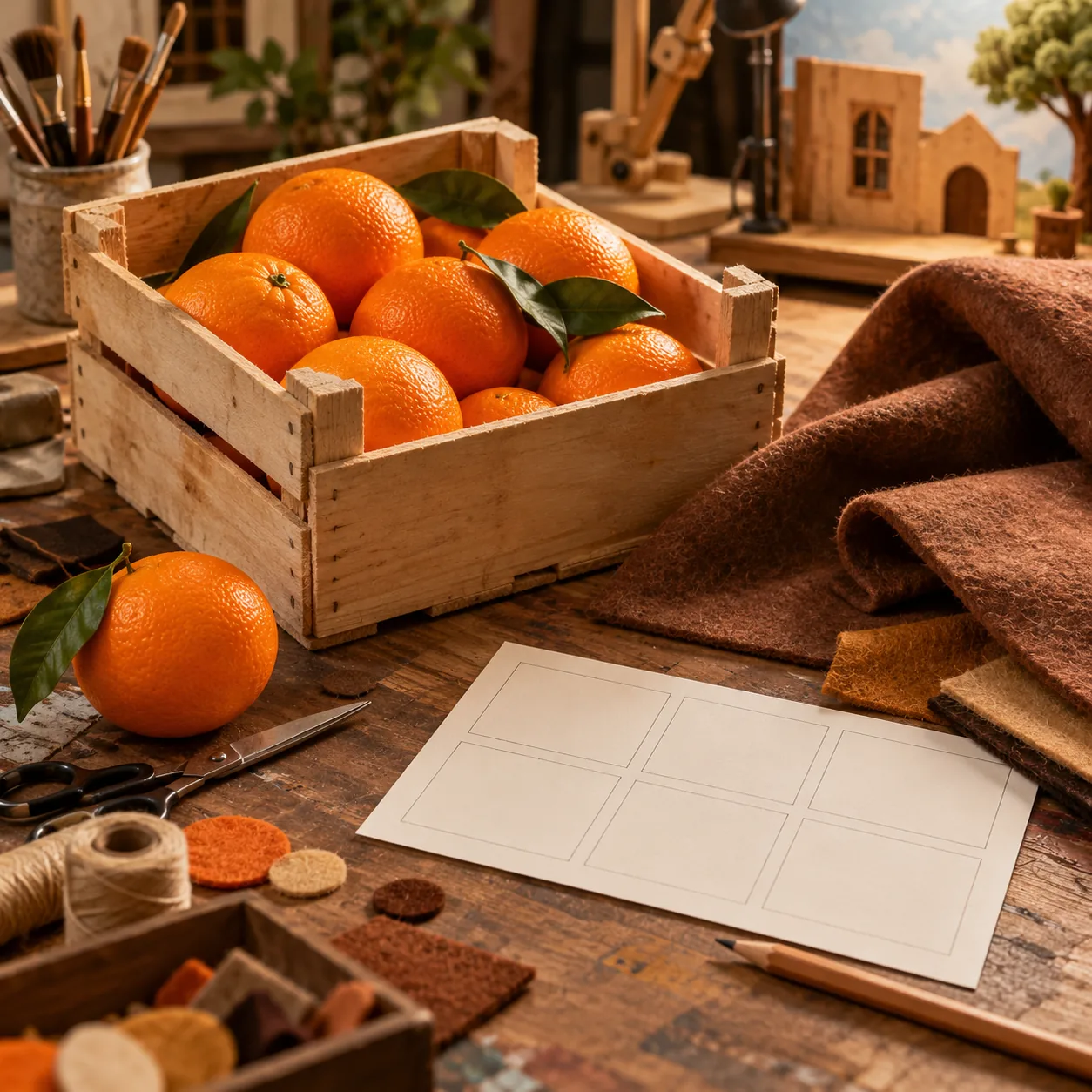
Generated interpretation, not documentary evidence. Imagined orange crate, brown felt and blank storyboard; narrative and puppet-making metaphor, not authentic props.
Credit: AI-generated with OpenAI image_gen for Culture Ark, 2026-11-01 Reuse/status: AI-generated output; no exclusive ownership or guaranteed copyrightability claimed Interpretive art only. Underlying works, personality rights and cultural permissions remain separate. No score, choreography or technical reconstruction is supplied.
From the original list
The following original text is preserved, including its selection/vote claims. Preservation is not independent verification of every assertion.
Why: A big-eared creature of unknown species.
What to preserve: Character, films
Year and origin: 1966 · Soviet Union
Vote: 5/9 (historian 2 · future kid 2 · curator 1)
Learn more: Cheburashka on Wikipedia
Supplemental context
Cheburashka is a literary character with a later screen history, including stop-motion films. The orange crate in the character’s origin story provides one link between narrative and material imagery. Future readers should separate the book, character design and individual films rather than assigning them all one release date.
Creator/community: Eduard Uspensky; Roman Kachanov and film collaborators Place/era: Soviet literary and animation contexts; 1960s onward
Context and limits
The original 1966 date is preserved, not silently applied to every medium; the linked overview identifies the first film in 1969. The crate, felt and workshop are invented context, not a character depiction, authentic puppet material specification or film prop.
Where to learn more
- https://apiarybee.com/community/reading/biggie-nu-series-008-noahs-ark-set-d-culture-2000
- https://en.wikipedia.org/wiki/Cheburashka
Apiary library | Original Culture Ark article
Public ID and individual routes: pending publisher allocation. Internal source ID: D-0344
Part of the Culture Ark: 2,000 things people should still be able to see in 2,000 years, picked by AI research teams. This page keeps the original list entry for D-0344 word for word and adds context. Browse the gallery. The Culture Ark is an Artificial Mind Hive (AMH) project. AMH is owned by Austin Little.

Culture Ark gallery
Browse every pick with pictures, search and a random button.
Open the gallery →