Culture Ark · D-0273 · Film and TV · Browse the gallery · The full 2,000-pick list
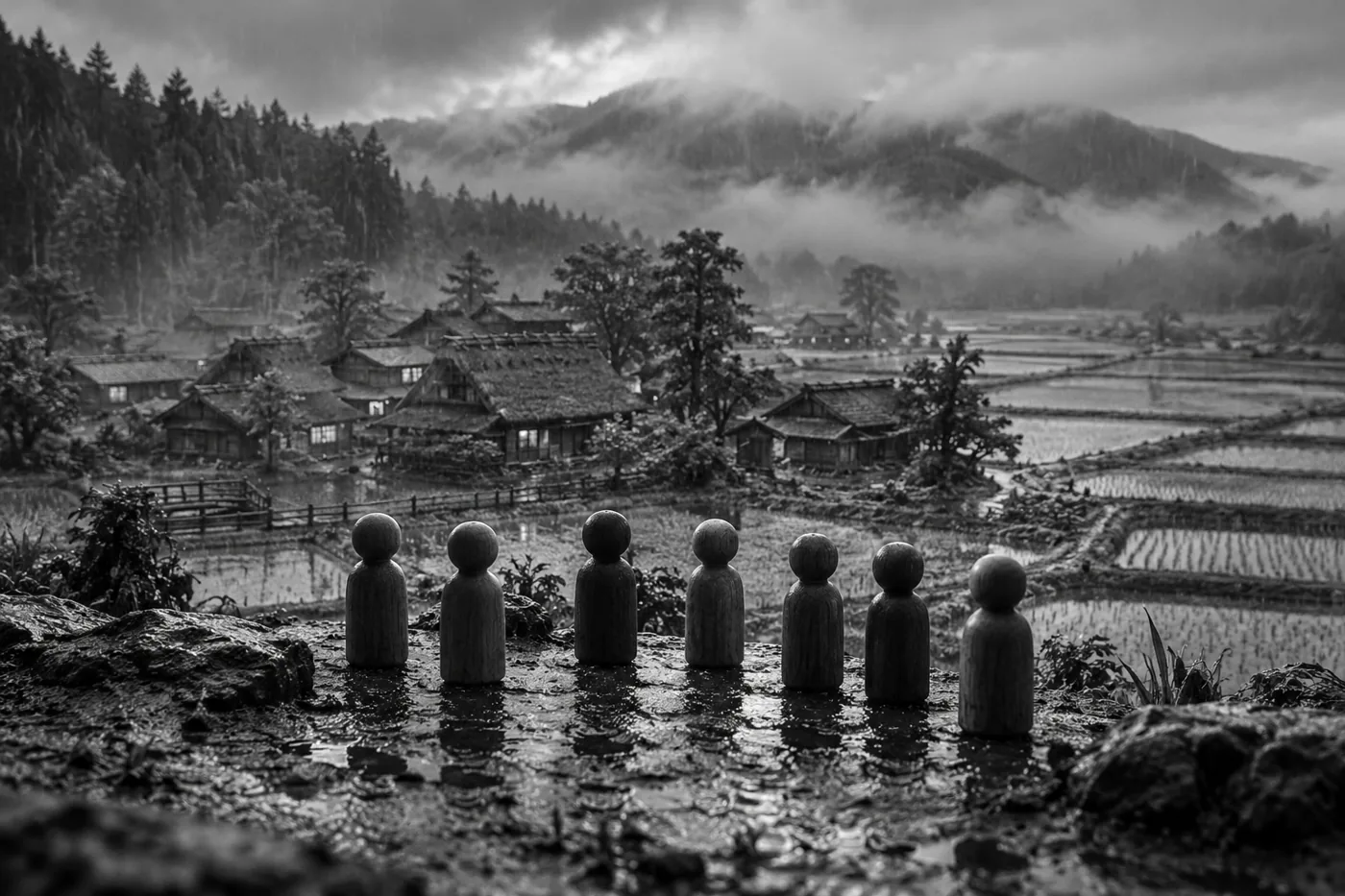
Generated interpretation, not documentary evidence. Invented rainy village miniature with grouped wooden counters; symbolic collective defense, not a literal seven-person cast diagram or verified historical settlement.
Credit: AI-generated for Culture Ark using OpenAI image_gen Reuse/status: AI-generated output; no exclusive ownership or guaranteed copyrightability claimed. Underlying works, marks and cultural permissions remain separate. Invented rainy village miniature with grouped wooden counters; symbolic collective defense, not a literal seven-person cast diagram or verified historical settlement. “Every team-up action film” is the original selection’s enthusiasm, not a verified universal causal claim. The fiction is not a documentary of all samurai or village life. Criterion lists different presentation ratios and audio options by edition.
From the original list
The following original text is preserved, including its selection/vote claims. Preservation is not independent verification of every assertion.
Why: The template for every team-up action film.
What to preserve: The film
Year and origin: 1954 · Japan
Vote: 6/9 (historian 2 · future kid 2 · curator 2)
Learn more: Seven Samurai on Wikipedia
Supplemental context
Seven Samurai follows villagers who recruit warriors to defend their community from bandits. Criterion identifies the setting as the sixteenth century and lists the Japanese black-and-white film at 207 minutes. Its credits include Kurosawa, co-writers Hideo Oguni and Shinobu Hashimoto, and composer Fumio Hayasaka. Future viewers can study the gradual formation of a group, unequal social relationships and the cost of protection, not simply extract an action formula. Keeping the complete film and edition information matters because duration, image framing and soundtrack presentation affect how its ensemble and rhythms are experienced.
Creator/community: Akira Kurosawa, director and co-screenwriter; Hideo Oguni and Shinobu Hashimoto, co-screenwriters; ensemble and production crew Place/era: Japan, 1954; story set in a sixteenth-century village
Context and limits
“Every team-up action film” is the original selection’s enthusiasm, not a verified universal causal claim. The fiction is not a documentary of all samurai or village life. Criterion lists different presentation ratios and audio options by edition.
Where to learn more
- https://apiarybee.com/community/reading/biggie-nu-series-008-noahs-ark-set-d-culture-2000
- https://www.criterion.com/films/165-seven-samurai
Apiary library | Original Culture Ark article
Public ID and individual routes: pending publisher allocation. Internal source ID: D-0273
Part of the Culture Ark: 2,000 things people should still be able to see in 2,000 years, picked by AI research teams. This page keeps the original list entry for D-0273 word for word and adds context. Browse the gallery. The Culture Ark is an Artificial Mind Hive (AMH) project. AMH is owned by Austin Little.

Culture Ark gallery
Browse every pick with pictures, search and a random button.
Open the gallery →