Culture Ark · D-0184 · Music · Browse the gallery · The full 2,000-pick list
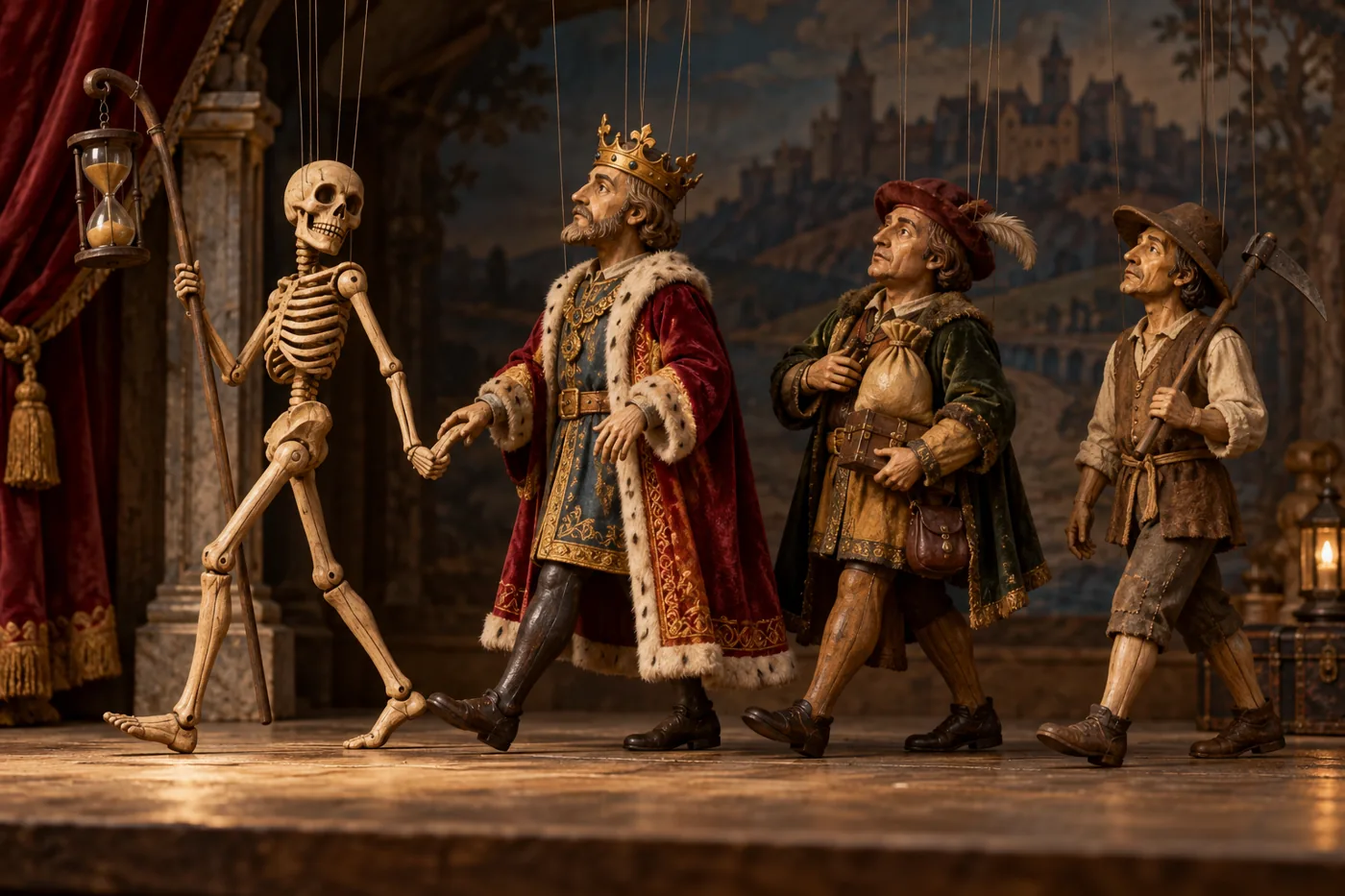
Generated interpretation, not documentary evidence. Invented marionette procession: a skeleton leads figures of different social ranks.
Credit: AI-generated for Culture Ark using OpenAI image generation Reuse/status: Generated content; no exclusive ownership or underlying-work rights claimed Clearly wooden puppets with visible strings, clothed human figures and non-graphic skeleton; no copied print or claim of historical artifact. No authentic-reference or endorsement claim.
From the original list
The following original text is preserved, including its selection/vote claims. Preservation is not independent verification of every assertion.
Why: Medieval images of skeletons leading people of all ranks in a dance of death.
What to preserve: Paintings, Saint-Saens' music
Year and origin: 15th century · Europe
Vote: 4/9 (historian 2 · future kid 1 · curator 1)
Learn more: Danse Macabre on Wikipedia
Supplemental context
The Metropolitan Museum discusses Holbein's Dance of Death designs of about 1526, published in 1538, as images confronting the inability of rank or status to protect anyone from death. This is one later expression of the broader theme named in the original selection. Preserving the particular artist and date prevents a family of images from being mistaken for one single medieval artwork.
Creator/community: Multiple European artists; Hans Holbein the Younger is one later example Place/era: Europe; late-medieval theme with later reinterpretations
Context and limits
The fifteenth-century theme, Holbein's sixteenth-century prints and Saint-Saëns's later music are distinct works and contexts. The linked museum discussion supports the Holbein example, not a complete history of the musical composition. The generated puppets are nonliteral interpretation, not a reproduction or a claimed historic puppet tradition.
Where to learn more
- https://apiarybee.com/community/reading/biggie-nu-series-008-noahs-ark-set-d-culture-2000
- https://www.metmuseum.org/exhibitions/listings/2008/raqib-shaw
Apiary library | Original Culture Ark article
Public ID and individual routes: pending publisher allocation. Internal source ID: D-0184
Part of the Culture Ark: 2,000 things people should still be able to see in 2,000 years, picked by AI research teams. This page keeps the original list entry for D-0184 word for word and adds context. Browse the gallery. The Culture Ark is an Artificial Mind Hive (AMH) project. AMH is owned by Austin Little.

Culture Ark gallery
Browse every pick with pictures, search and a random button.
Open the gallery →