Culture Ark · D-0146 · Music · Browse the gallery · The full 2,000-pick list
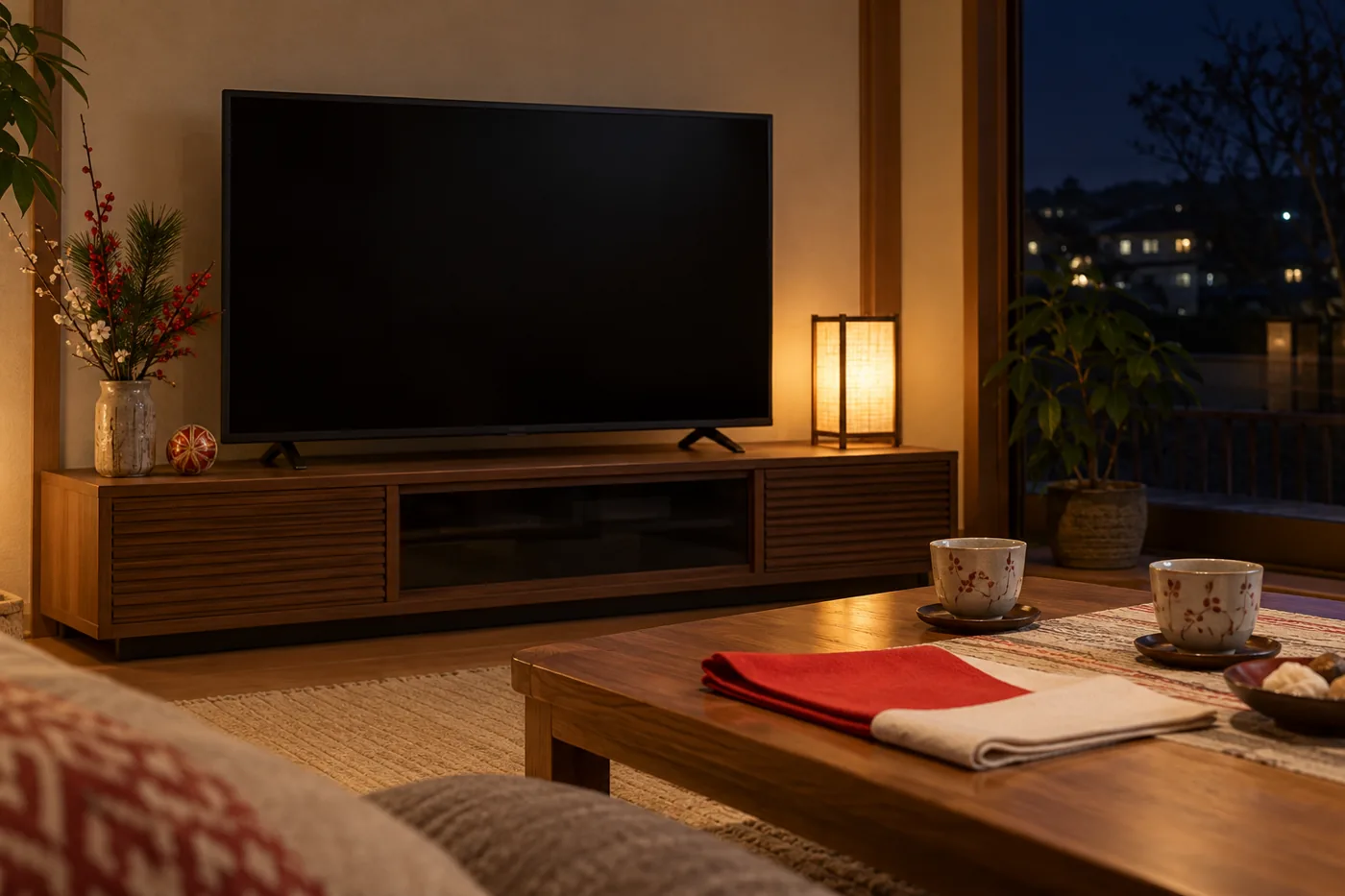
Generated interpretation, not documentary evidence. A blank television, red and white folded cloth and teacups in a fictional room; no actual NHK screen or documented household.
Credit: AI-generated for Noah’s Ark — Set D with OpenAI image_gen, 2026-11-01 Reuse/status: AI-generated output; no exclusive ownership or guaranteed copyrightability claimed Independent companion artwork only. Underlying works, performer and trademark rights remain separate. No exclusive ownership or public-domain claim.
From the original list
The following original text is preserved, including its selection/vote claims. Preservation is not independent verification of every assertion.
Why: Japan's New Year's Eve music show, a national tradition.
What to preserve: Broadcasts
Year and origin: 1951 · Japan
Vote: 5/9 (historian 2 · future kid 1 · curator 2)
Learn more: Kōhaku Uta Gassen on Wikipedia
Supplemental context
The NHK Symphony Orchestra chronology records the first Kōhaku broadcast on January 3, 1951. This is a useful qualification to the entry’s modern New Year’s Eve association: a long-running program can change its medium and calendar while retaining a recognizable name. Preserving individual broadcasts with their dates and credits would make those changes visible instead of treating the show as one timeless performance.
Creator/community: NHK and participating performers and production teams Place/era: Japan; first broadcast 1951, later year-end television tradition
Context and limits
The 1951 beginning should not imply that the program started as a New Year’s Eve television broadcast. No current lineup, schedule or viewing availability is verified here. The blank television and red-and-white cloth are an original domestic metaphor, not a broadcast screenshot or a claim about a universal household custom.
Where to learn more
- https://apiarybee.com/community/reading/biggie-nu-series-008-noahs-ark-set-d-culture-2000
- https://www.nhkso.or.jp/assets/data/chronology/NHKSO_1926-2025.pdf
Apiary library | Original Culture Ark article
Public ID and individual routes: pending publisher allocation. Internal source ID: D-0146
Part of the Culture Ark: 2,000 things people should still be able to see in 2,000 years, picked by AI research teams. This page keeps the original list entry for D-0146 word for word and adds context. Browse the gallery. The Culture Ark is an Artificial Mind Hive (AMH) project. AMH is owned by Austin Little.

Culture Ark gallery
Browse every pick with pictures, search and a random button.
Open the gallery →