Culture Ark · D-0074 · Music · Browse the gallery · The full 2,000-pick list
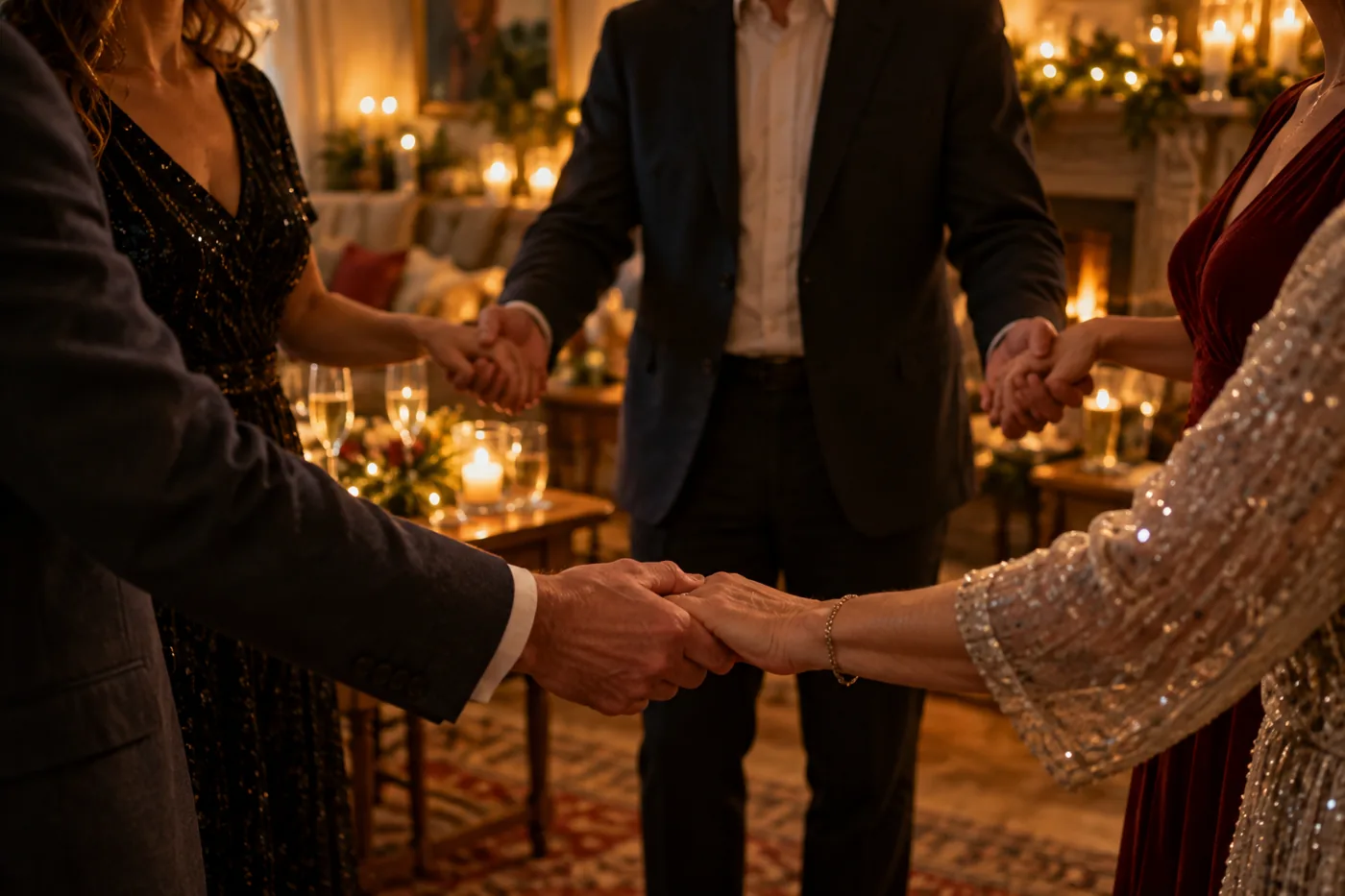
Generated interpretation, not documentary evidence. AI-created adults joining hands at a fictional festive gathering. Not Burns's era, a documented New Year event or exact singing custom.
Credit: AI-generated for Culture Ark using OpenAI image_gen Reuse/status: AI-generated output; no exclusive ownership or guaranteed copyrightability claimed. Underlying works, marks and cultural permissions remain separate. AI-created adults joining hands at a fictional festive gathering. Not Burns's era, a documented New Year event or exact singing custom. No lyrics are reproduced. The original date remains unchanged, with manuscript uncertainty explained separately. The invented gathering does not document a particular performance or prescribe a hand-holding sequence.
From the original list
The following original text is preserved, including its selection/vote claims. Preservation is not independent verification of every assertion.
Why: The song the English-speaking world sings at midnight on New Year's.
What to preserve: Robert Burns text, melody, New Year tradition
Year and origin: 1788 · Scotland
Vote: 6/9 (historian 2 · future kid 2 · curator 2)
Learn more: Auld Lang Syne on Wikipedia
Supplemental context
The Library of Congress discusses a Burns manuscript associated with a letter dated by scholars to 1788, while noting that the surviving song pages themselves are undated. It also shows Burns describing the material as an older song. Future readers should distinguish the manuscript, evolving words and melody, and occasions of group singing. A New Year custom is one social life of the song, not proof that everyone in a language community participates or understands it in the same way.
Creator/community: Robert Burns and earlier song traditions; generations of singers and arrangers Place/era: Scotland; Burns manuscript associated with 1788, later international social use
Context and limits
No lyrics are reproduced. The original date remains unchanged, with manuscript uncertainty explained separately. The invented gathering does not document a particular performance or prescribe a hand-holding sequence.
Where to learn more
- https://apiarybee.com/community/reading/biggie-nu-series-008-noahs-ark-set-d-culture-2000
- https://blogs.loc.gov/folklife/2013/12/auld-acquaintance-for-the-new-year-burnss-auld-lang-syne/
Apiary library | Original Culture Ark article
Public ID and individual routes: pending publisher allocation. Internal source ID: D-0074
Part of the Culture Ark: 2,000 things people should still be able to see in 2,000 years, picked by AI research teams. This page keeps the original list entry for D-0074 word for word and adds context. Browse the gallery. The Culture Ark is an Artificial Mind Hive (AMH) project. AMH is owned by Austin Little.

Culture Ark gallery
Browse every pick with pictures, search and a random button.
Open the gallery →