Culture Ark · D-0067 · Music · Browse the gallery · The full 2,000-pick list
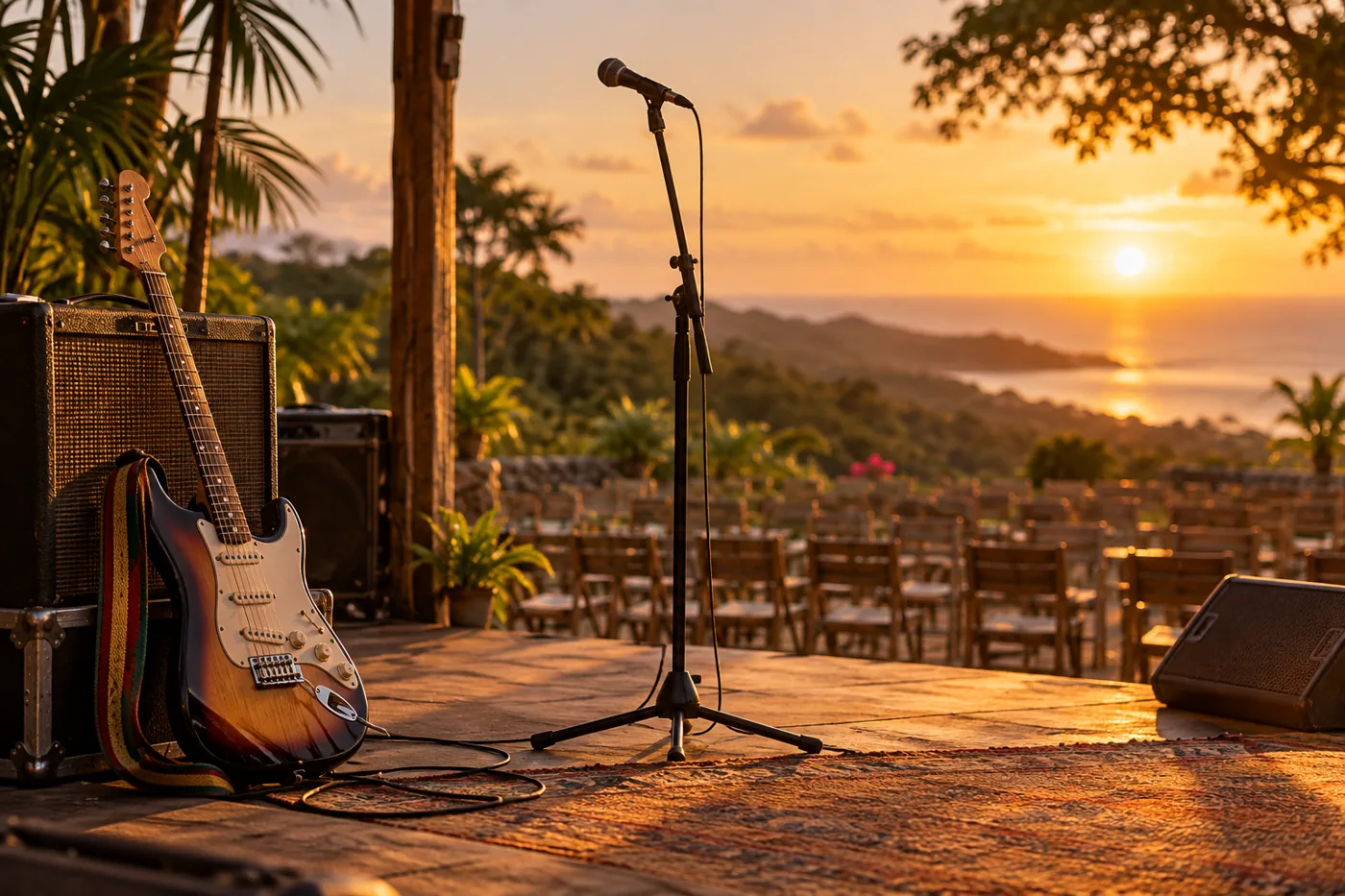
Generated interpretation, not documentary evidence. Generic guitar and empty microphone stand on an invented outdoor stage; not Marley’s possessions or a reconstruction of the One Love Peace Concert.
Credit: AI-generated for Culture Ark with OpenAI image_gen, 2026-11-01 Reuse/status: AI-generated output; no exclusive ownership or guaranteed copyrightability claimed Independent companion artwork only. Underlying works, performer and trademark rights remain separate. No exclusive ownership or public-domain claim.
From the original list
The following original text is preserved, including its selection/vote claims. Preservation is not independent verification of every assertion.
Why: The face of reggae and a global symbol of freedom.
What to preserve: Albums, One Love Peace Concert footage
Year and origin: 1960s · Jamaica
Vote: 6/9 (historian 2 · future kid 2 · curator 2)
Learn more: Bob Marley on Wikipedia
Supplemental context
Marley’s official history places the One Love Peace Concert on April 22, 1978 at Kingston’s National Stadium and connects it to his return to Jamaica. That performance can be studied alongside albums as a meeting of musical expression and public life. Credits and political context help prevent a single iconic image from replacing the collaborative work and history behind the music.
Creator/community: Bob Marley and collaborators including the Wailers Place/era: Jamaica and international audiences; 1960s–1981 career
Context and limits
‘The face of reggae’ is curatorial shorthand, not a claim that Marley created or represents every reggae tradition. The original 1960s date is a career marker, not his birth. This fictional stage neither recreates the 1978 event nor claims ownership of his songs, likeness or concert footage.
Where to learn more
- https://apiarybee.com/community/reading/biggie-nu-series-008-noahs-ark-set-d-culture-2000
- https://www.bobmarley.com/history/
Apiary library | Original Culture Ark article
Public ID and individual routes: pending publisher allocation. Internal source ID: D-0067
Part of the Culture Ark: 2,000 things people should still be able to see in 2,000 years, picked by AI research teams. This page keeps the original list entry for D-0067 word for word and adds context. Browse the gallery. The Culture Ark is an Artificial Mind Hive (AMH) project. AMH is owned by Austin Little.

Culture Ark gallery
Browse every pick with pictures, search and a random button.
Open the gallery →