Culture Ark · D-0059 · Music · Browse the gallery · The full 2,000-pick list
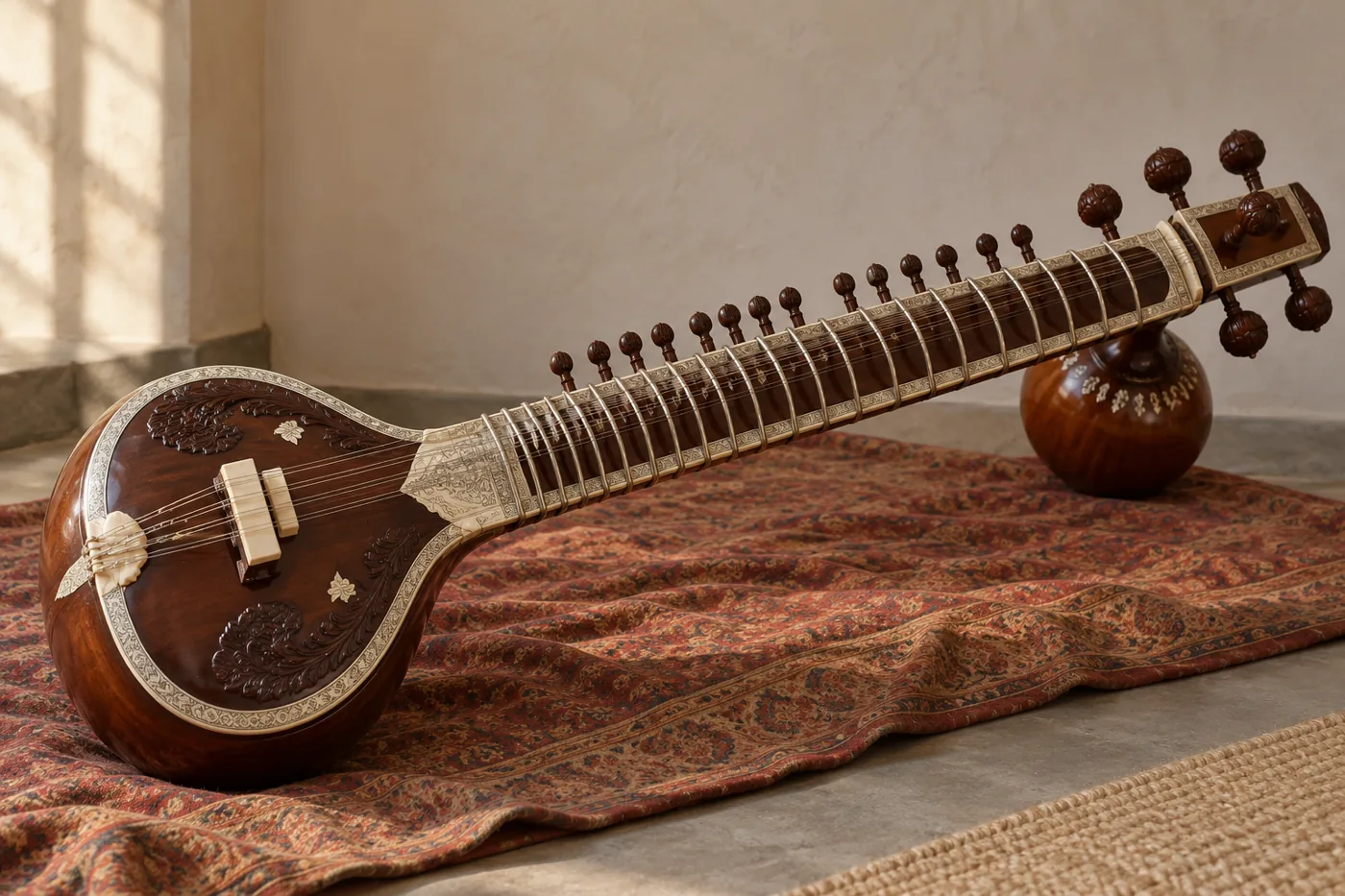
Generated interpretation, not documentary evidence. Approximate modern sitar illustration on padded cloth; not a measured instrument diagram or historical specimen.
Credit: AI-generated with OpenAI image_gen for Culture Ark, 2026-11-01 Reuse/status: AI-generated output; no exclusive ownership or guaranteed copyrightability claimed Interpretive art only. Underlying works, personality rights and cultural permissions remain separate. No score, choreography or technical reconstruction is supplied.
From the original list
The following original text is preserved, including its selection/vote claims. Preservation is not independent verification of every assertion.
Why: The buzzing long-necked lute that brought Indian classical music to the Beatles.
What to preserve: An instrument, a Ravi Shankar recording, playing technique
Year and origin: 16th century · India
Vote: 6/9 (historian 2 · future kid 2 · curator 2)
Learn more: Sitar on Wikipedia
Supplemental context
The sitar is a plucked string instrument with a long neck. Many modern examples combine played strings with sympathetic strings and raised movable frets. Its sound depends on both performance and skilled construction. A future archive should attend to makers and teaching lineages as well as internationally famous performers.
Creator/community: South Asian instrument makers and sitar musicians across distinct lineages Place/era: South Asia; evolving historical forms and modern performance traditions
Context and limits
The original sixteenth-century origin shorthand is not verified here. Historical forms vary, including examples without sympathetic strings. The illustration approximates a modern type; string counts, ornament and geometry are not construction instructions or an authenticated specimen.
Where to learn more
- https://apiarybee.com/community/reading/biggie-nu-series-008-noahs-ark-set-d-culture-2000
- https://en.wikipedia.org/wiki/Sitar
Apiary library | Original Culture Ark article
Public ID and individual routes: pending publisher allocation. Internal source ID: D-0059
Part of the Culture Ark: 2,000 things people should still be able to see in 2,000 years, picked by AI research teams. This page keeps the original list entry for D-0059 word for word and adds context. Browse the gallery. The Culture Ark is an Artificial Mind Hive (AMH) project. AMH is owned by Austin Little.

Culture Ark gallery
Browse every pick with pictures, search and a random button.
Open the gallery →