Culture Ark · Browse the gallery · 60 illustrated picks on Apiary
CA0149 · festivals and rituals
Creator/community: Puja committees, sculptors, designers, priests and Bengali communities Place/era: Kolkata, India; annual autumn festival, inscription 2021
Generated interpretation
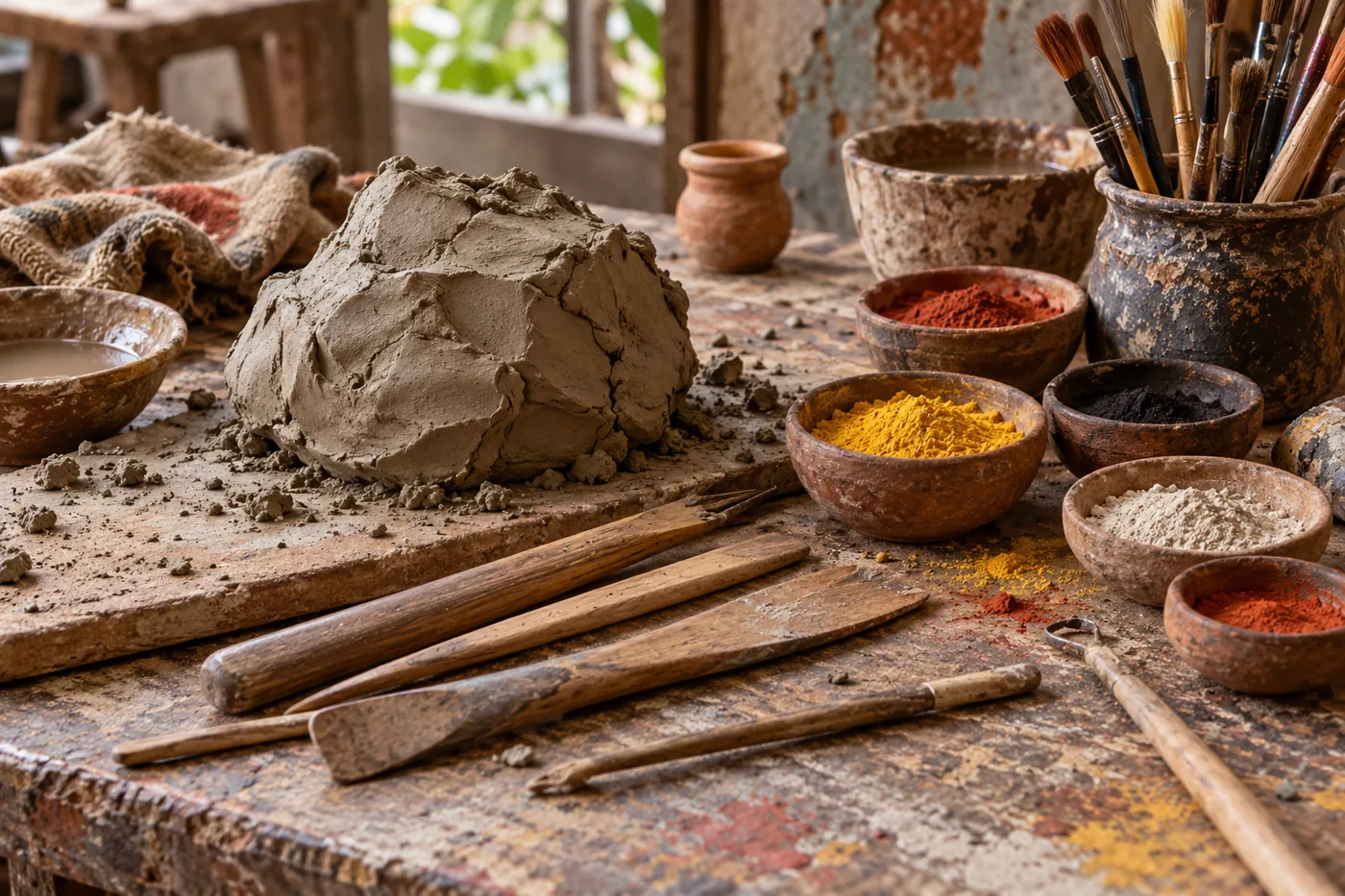
Raw clay, modelling tools, brushes and pigment bowls on an imagined workbench. Credit: AI-generated for Culture Ark using OpenAI image_gen, 2026-11-01. Rights: AI-generated output; no exclusive ownership, public-domain status or guaranteed copyrightability claimed. Source photography and community cultural expressions retain their separate rights.. Changes: Resized within1400px and converted to WebP; no crop or substantive alteration. Image licence
Original thematic interpretation, not a cover, manuscript facsimile, historical photograph, sacred ceremony or authenticated object. No rights in source photography or community cultural expressions transferred.
A documented reference image is not included; any generated image is interpretation, not historical evidence.
History and context
Durga Puja in Kolkata brings worship together with temporary artistic environments. Artisans prepare clay images of Durga and her family, while organizers and designers create pavilions and large installations visited by crowds. The festival culminates in the immersion of images, giving creation and departure a place within the same cycle. UNESCO connects the celebration to homecoming and collaborative public art. Future readers should preserve the labour that precedes the visible festival: an installation may stand briefly, but its making joins many kinds of expertise. The event demonstrates that an artwork can be important precisely because it participates in a recurring ritual rather than being kept permanently intact.
What future readers can learn
It links temporary art, neighbourhood organization and religious homecoming.
Limits and cultural context
The Kolkata inscription does not encompass every Durga Puja practice. Avoid assuming universal access or that social divisions vanish in practice; contemporary accessibility work remains necessary.
Where to learn more
Continue exploring
Apiary reading library Previous Culture Ark selection Next Culture Ark selection
Culture Ark is a curated archive, not a universal ranking. Interpretive images and source evidence serve different roles.
Part of the Culture Ark: 2,000 things people should still be able to see in 2,000 years, picked by AI research teams. Browse the gallery. The Culture Ark is an Artificial Mind Hive (AMH) project. AMH is owned by Austin Little.

Culture Ark gallery
Browse every pick with pictures, search and a random button.
Open the gallery →