
| Category | Value (records) |
|---|---|
| Species | 12 |
| Genus or broader | 19 |
| Image unusable | 5 |
Illustrative values, not sourced observations. Counts report identification resolution, not numbers of species.
Two people review a photograph of an insect on a flower. One calls it a bumble bee. The other offers a species name. When they examine the original frame, they can support the broad identification but cannot see the characters that would distinguish the suggested species from similar ones. The photograph has not failed. It records a useful group-level encounter. The mistake would be trying to make the name more precise than the evidence to avoid leaving an empty field.
A second mistake happens much later. Imagine the broad record enters a spreadsheet next to several expertly identified species. An analyst counts every unique label and calls the result species richness. Now a group name has become an additional species even though it may include some of the species already listed. Nothing about the original observation was wrong. The error arose when somebody used it at a different level from the one at which it was supported.
Good records make room for both broad groups and finer determinations. Each has a purpose. A timed pollinator count may gather robust information at the broad level; a taxonomic inventory may need species-level evidence, expert review and species-specific limitations. The challenge is to preserve those lines while still allowing useful analysis. This article follows an invented set of records through those decisions. It does not provide an identification key or infer the fauna of an actual site.
A precise-looking name need not be a precise observation
A field observer generally starts with an animal, a short view and a time. They may see body shape, a color pattern or behavior that suggests a group. A good photograph can preserve characters that are difficult to inspect in motion, but it can also hide them. One side of the animal may be out of frame. Parts may overlap. The relevant markings might be smaller than the image resolution. A field name should express which of those limits mattered, not just how familiar the insect looked.
A species name can come from a confident impression, from a plausible automatic suggestion or from a documented determination using suitable characters. The typography is identical. Preserve how the name was reached and which evidence supports it. A later reviewer should be able to tell whether the proposed species is an unverified working guess or the conclusion of a specific examination. A Latin name does not carry its own chain of custody.
The U.S. Geological Survey's guidance on identifying bee specimens describes identification tools and the importance of expertise in reviewing determinations. It is a useful reminder even for a photography project that does not collect specimens. That guidance does not imply that every photograph must be examined by a specialist, or that a specialist can identify every image. It helps explain why the absence of particular characters can make a finer name inappropriate even when a broad group is credible.
Keep certainty and resolution separate. An observer can be highly confident that an insect belongs to a broad group and have little evidence for species. Another record might contain a tentative species suggestion pending review. Those are not two points on one scale from bad to good. They communicate different things about confidence and level. A report can store a supported group as the accepted determination and retain the provisional species suggestion in a distinct field.
A scene can also support a qualified observation of behavior without precise identity. “An unidentified bee-like insect contacted a flower” is different from a species record, but can be useful when the protocol permits it. If even the broad group is uncertain, say that. Avoid making a flower's identity or the site's reputation stand in for information about the animal. A good record says what was seen and what was identified so later analysis can use each fact appropriately.
Broad-group monitoring is a design, not a compromise after failure
The UK Pollinator Monitoring Scheme's Flower-Insect Timed Counts provide a concrete example of a formal design based on broad insect groups. The scheme describes a ten-minute watch of a defined patch of a chosen target flower, records aspects of conditions and gives guidance on broad classifications. Those details serve the survey's stated question. Significant effort goes into making the watch repeatable, not into requiring every participant to supply a species name.
An operational group in such a program is defined by the protocol. Some labels may correspond to familiar taxonomic groupings; others may be practical bins or include unresolved visitors recorded as instructed. A group that is consistent and appropriate for the objective can be more useful than a mix of ambitious species guesses. Follow the program's actual instructions if participating. This article is not an alternative recording form or a claim that the UK categories apply without modification in every region.
The strength of broad-group work is its clear scope. A count can record visitor activity under defined flower, time and weather conditions without pretending to inventory all insects in a landscape. Separate species-level evidence may complement it. Neither stream needs to consume the other. If an expert later identifies a photographed visitor, the program can preserve the broad category used by the count alongside the finer determination, where the records actually link. That does not retroactively change the original watch effort.
Imagine comparing two sites with different observers. If one fine-grains every bumble bee into proposed species while the other logs only bumble bees, the raw set of labels could make the first site appear much richer. A common broad-group reporting layer can preserve a defensible comparison if the protocol and conditions are otherwise suitable. A separate species inventory can declare its own eligibility rule and effort. This is not a ban on species work. It is a way to give each project the right denominator.
Broad categories are not magic against error. Observers still need guidance and may disagree on difficult views. A well-defined watch can be interrupted by weather or obscured flowers. Classification at a broader level makes some decisions more feasible, not all judgments automatic. Record uncertain encounters as the relevant protocol permits and make the definition of each count available to people who will use it later.
The toy chart counts resolution, not taxa
The companion chart, “Toy record resolution levels,” shows invented classifications of thirty-six records. It is not derived from a field survey, a photograph archive or either source above. Each record has one designated terminal status for the illustration. A species entry is a record supported at species level under a fictional review rule. Genus or broader collects records accepted only at a coarser level. Image unusable means the view cannot support the classification task as defined.
| Toy record resolution | Illustrative records |
|---|---|
| Species | 12 |
| Genus or broader | 19 |
| Image unusable | 5 |
Twelve plus nineteen plus five equals thirty-six. Thirty-one records were classifiable at some stated level in the example. Twelve were resolved to species, which could represent repeated observations of one species, several species or another combination. The chart gives no species names or membership relationships. It does not establish that twelve distinct species were found. It supplies no evidence that the five unusable views contained five different insects or even any species absent from the rest.
A reader might ask for the share resolved to species. Twelve out of thirty-six is one third of the example's full record list. Twelve out of thirty-one instead describes the share among records with some accepted classification. The two denominators answer distinct questions. The illustrative proportions tell nothing about an actual observer's performance. In a real report the ratio may reflect viewing conditions, group composition and selection of images as much as skill.
Notice what the chart leaves undefined. It does not give names within Genus or broader, distinguish family from operational group, or tell whether the records could be linked to independent visits. Those distinctions could be vital for a research project. The chart intentionally summarizes resolution alone. A caption light on scope could tempt readers to treat “Species” and “Genus or broader” as categories of animals. Spell out that they are categories of records and that the values are invented.
Richness counts distinct species, not the depth of the filing tree
Imagine four verified records of one species in a genus, two verified records of a second species in that genus, and three records assigned only to the genus. The listed labels are two species names and a genus name. That is not three observed species. The coarse records might belong to the two known species, to others, or to a mixture. The data leave those alternatives open. Treating a parent taxon as another species invents richness precisely where identification was unresolved.
With suitable definitions, the distinct verified species within a filtered evidence set can be counted as documented species richness. That is not automatically an estimate of all species present. The method may favor species easy to photograph or recognize, and some may rarely be detected in the chosen watch. Phrase the result as a number of verified taxa under the stated method when that is what you know. Avoid saying that the unexplored part of the list contains no other species.
A genus-level record can sometimes constrain interpretation without contributing a verified species name. If the genus is confidently identified and no member is named elsewhere in the file, the record may support presence of at least one member of that genus. That is an inference about a minimum under the taxonomy and evidence, not a discovered species or a general instruction for adding parent labels to a richness score. A study specifically constructing bounds or estimates for mixed-resolution data should define its rules and uncertainties. A casual count of unique labels is not such a method.
The opposite deletion can also mislead. Throwing away every broad record before reporting any community results might disproportionately omit difficult groups or habitats where photography is awkward. For an analysis inevitably restricted to verified species, disclose the filter and preserve the broader data for a separate view. Where a comparison is valid at a common coarse level, aggregate confirmed fine records into the appropriate standardized categories rather than discarding evidence solely because it was obtained more precisely.
Report the difference between number of records and number of names prominently. Many records can support recurring presence of one species. One strong record can add a new documented taxon to a list under justified rules. A species-level status chart can say how much evidence reached a type of resolution; it is not itself a species accumulation curve. Avoid switching unit names when a number is moved from an inventory to an educational panel.
Standardize categories when comparing unequal resolution
Consider two groups investigating flowering beds. One has a reviewed species list for a subset of its photos. The other has complete counts of broad categories for its protocol, without species names. If their question is the frequency of certain operational categories, decide whether the species labels can be mapped to those categories by an explicit common rule. Check the unit and protocol as well: equal category names do not equate opportunistic photos with timed encounters. Standardizing taxonomy does not repair a mismatch in effort.
Mapping from a finer name to an appropriate broader bin is usually clearer than mapping a coarse record downward. A verified species known to belong to a defined group can contribute to that group, subject to the protocol. An unresolved record within that group cannot be allocated among particular species merely because several are common. Preserve original and derived fields so the aggregation is reversible for review. If a record is ambiguous even at the chosen group boundary, keep a qualified category rather than creating false precision.
There may be imperfect overlap between systems. A protocol could use visually convenient pollinator groups that do not align one-to-one with formal taxonomic ranks. A project might define a broad category differently after observer training. Document the mapping version and any records that cannot be mapped. Writing “other” for everything difficult can conceal more than one issue: valid members of a defined remainder, unknown group and unusable image can all have different meanings.
If you compare species names across years, attend to synonyms and taxonomic revisions. An older name and its current accepted name should not automatically count as separate indicators of diversity. A broad historical label might also refer to a different range of taxa than a modern treatment. Where necessary, retain the original label and record the mapping to the current taxonomy. That effort protects biological change from being confused with a change in names.
Think about whether the analysis should have two outputs. A watch report can present encounter counts in consistent broad groups. A reviewed occurrence list can document species with suitable evidence, independent of the watch tally. Clear links can allow a reader to move between outputs without merging denominators. This is often simpler than building a single score that purports to value identification confidence, species diversity and observation activity at once.
Three negative-looking records are not equivalent
A watch might detect no visitor under clearly stated conditions. An observer might see a visitor without resolving its group. An image might be too poor even to judge whether it contains the evidence required for the project. These are three conditions, not three ways to write zero. The first is a scoped non-detection, the second is positive evidence of an encounter with limited identification, and the third is a limit of one record or view.
In the toy chart image unusable is a status for the stated classification task. It need not mean a field log showing the visit was invalid. If someone witnessed an insect land but the camera produced a blurred frame, the audio or notebook may support an encounter record. A different project requiring a usable photograph would exclude that item for its own purpose. Preserve both facts in separate fields so a report can follow the intended eligibility rule.
Conversely, an impeccably photographed insect can have unclear biological context. A cropped image may show enough for identification but not establish what flower it visited, where it occurred or whether it was part of a timed session. Good identity evidence does not make a strong observation design by itself. An inventory of images and an inventory of protocol events may need separate statuses. Put missing context where it can be seen.
A real database can distinguish not assessed, unresolved at a given rank, unusable evidence and no individual observed during a suitable watch. Use terms participants can understand. A simple unknown code can be adequate if it links to the relevant field, but a single project-wide unknown may make later interpretation difficult. Read the data dictionary as if you were asking why a particular record did not enter the species inventory. If the answer is irrecoverable, refine the fields.
Track visits, images and animals separately
Suppose a volunteer takes ten photographs during a continuous encounter. Those frames can strengthen the identification of one animal and document different features. They do not represent ten independent occurrences. A second volunteer might produce one photograph of a different visit that looks nearly identical. The correct grouping depends on the available linkage, not the count of files. Give recordings stable identifiers and mark which episodes can or cannot be linked.
A photograph can also include more than one insect. Where the protocol permits, make a record for each well-defined subject with a link to the shared frame and an indication of which part of the image supports the determination. Otherwise an editor can easily attribute the identity of the clearest insect to its partly hidden neighbor. One image, one record and one animal are convenient equalities that fail in ordinary fieldwork.
Behavior introduces additional units. One animal may land repeatedly on the target flower, or move across several closely adjacent flowers. A timed count protocol may give specific instructions to avoid double counting, with suitable qualifications about what can actually be followed. A separate visit database might deliberately count events under another rule. Follow the rule in force and record limitations. Do not turn a count of all contacts into number of unique individuals just because the names of groups did not change.
At some scales it is enough to state that an occurrence record documents presence under its own criteria. It need not estimate abundance. At another scale a standardized count is useful for comparing documented activity. It need not give a species list. Different uses can coexist if their units survive copying and summarization. The trouble begins when a column labeled count is the only reminder of what investigators actually counted.
Review identification without erasing the original evidence
A practical review flow can keep the observer's original label, the accepted current determination, the evidence used and any alternatives not resolved. If someone supplies a finer name later, record why the change was made. The observation date stays what it was. A next-day identification update is not a new visit, and it should not create an extra occurrence merely because the original row and the revised row were both exported.
Allow the direction of revision to go either way. A specialist might narrow a record from a broad group to genus or species. Another reviewer might find insufficient support for an earlier specific label and expand it. That second kind of change improves the database even when a headline richness count drops. A project that rewards only finer labels can discourage the very corrections that protect its credibility. Track evidence quality as well as apparent progress.
An automated suggestion can help prioritize what to inspect, but its proposed label is not the same as accepted evidence. Its usefulness may depend on image quality, coverage of plausible species and how it was trained or tested. If the required characters are not visible, convergence of several suggestions cannot create them. Keep suggested names distinct from verified ones and invite human expertise when the conclusion warrants it. Report limitations rather than imputing a species from a confident-looking score.
Expert review also benefits from ordinary context. A record's date and place may suggest which groups are plausible. Such context can guide the review and still not be conclusive. When a result is rare or surprising, check that the metadata and image are correctly linked before declaring a new occurrence. An unusual date can be a clue to a real event or to a mistake. The review should be capable of recognizing either.
Document disagreements without turning every difference into a binary win. One reviewer may prefer a narrower result under an accepted set of characters, while another values conservative classification at the given image quality. Record the policy and why a result was accepted, left tentative or referred. Later users can then evaluate a consistent evidence set instead of finding judgments that were silently selected according to the needs of one report.
Let the effort data explain what the names cannot
A timed watch in a flower patch is one way to make an observation process more visible. Duration, the relevant flower and conditions are part of what makes the visits interpretable. An opportunistic photograph is another useful form of evidence, but it often has less information about what else could have been detected. It should not be treated as a five-minute or ten-minute count just because the image carries a timestamp. Record the method alongside the event.
Flower choice influences the encounter set. A patch dominated by blossoms suited to one group may not give equal opportunities to observe all groups. Use an appropriate protocol if comparing sites or times. Preserve meaningful differences in flowers, weather and visibility rather than assuming that a level field called effort accounts for everything. Equal clock time can still represent different opportunities to see insects.
Group-level observations are often easier than species identifications, but that advantage does not make their detections identical. Some animals may be hard to see on a dense cluster, some brief visits may escape a watch, and some groups may be easier to classify in particular light. Note limitations that materially affect the target. When the method cannot compare them fairly, a descriptive account is more useful than a ranking presented as precise.
Systematic differences in classification depth can also be a result worth reporting directly. Perhaps more images reach species level after the project starts taking a particular additional view without disturbing insects. That can be valuable learning about the procedure. It is not automatically a change in the local bee community. A plot of diagnosis level, such as our toy chart, is one place to ask those methodological questions without confusing them with species richness.
Prepare parallel summaries for different readers
A public education panel may simply describe what visitors can confidently recognize and use dates and sites for context. An occurrence dataset may need more careful taxonomy and versioned names. A formal protocol report may prioritize count consistency and hide or separately show opportunistic records. Do not make one display carry all those functions if it forces readers to guess which rule is operating. Keep differences visible in labels, not just in file names.
A table of recorded broad groups can be paired with a separate list of verified species from eligible evidence. Use a caption stating that broad entries are not additions to that list. If readers need the full breakdown of confidence level, show it as a third view. This is not unnecessary duplication: the first concerns visits and categories, the second concerns documented taxa, and the third concerns how observations were resolved.
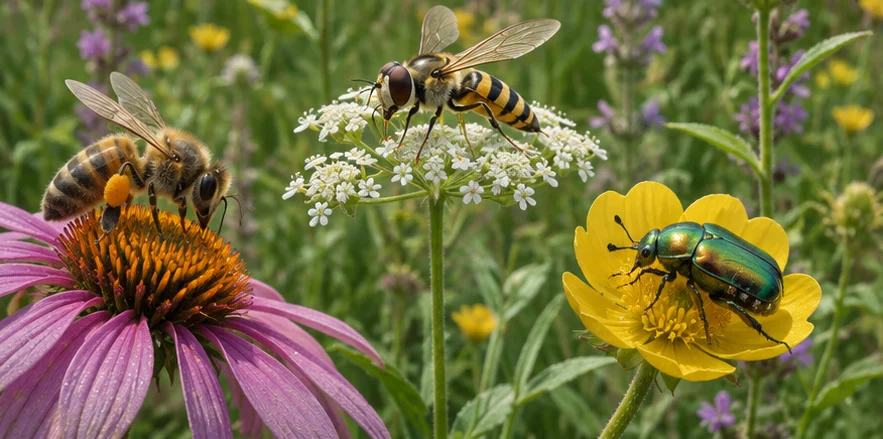
For the chart in this article, an honest reusable caption is “Thirty-six invented records grouped by identification resolution: twelve species-level records, nineteen genus-or-broader records and five unusable images. These are record counts, not a species total.” The companion editorial illustration shows assorted insects as an invitation to notice differences in form. It is not a verified photograph of three species or evidence about any named site. Captions should keep both boundaries even when the image and graphic travel separately.
A text summary can avoid unnecessary technical labels and still be precise. “We retained coarse observations for the standardized count and listed verified species separately” explains the useful choice in one sentence. If the coarse record was all the evidence could support, it should not be introduced as a lower-value failure. It is a result with an appropriate use. Communicating that helps observers provide useful records without feeling pressure to overspecify them.
Check how records behave after they leave the notebook
A site planner may receive a spreadsheet with one column named identification and never see the evidence that supported it. Even careful field distinctions can vanish in such an export. Carry fields for accepted name or category, taxonomic rank or protocol category, review status and observation method when those are relevant. It should be possible to filter and compare without interpreting punctuation, abbreviations or capitalization as proof of a distinction.
Also keep stable relationships among images and records. If a species determination comes from two views whose linkage is supported, do not count each image as an isolated record merely because a file format stores one per row. Conversely, if an image shows several animals and the dataset records them separately, mark the region or relevant evidence as appropriate. The analysis might take a different grouping from the storage layer. Explain that choice before comparing counts.
A small test case can expose mistakes early. Include two accepted records of the same species, one accepted member of the same genus without a species, an unassigned encounter and a technically unusable picture. Ask the export to generate both the broad count and the verified species list. If it reports extra species for the coarse record, or treats the unusable image as a no-visitor session, fix the mapping. Such a test protects the logic even when there is no large analysis yet.
Another test can check revisions. Suppose a previously accepted species determination becomes unresolved at genus level. The mapped broad group might remain unchanged, while documented species richness could change if that was the only accepted record of the species. A good pipeline shows those different consequences without inventing a new visit. Analysts need to see what changed and which results depend on it. Handling such changes honestly is part of publishing an inventory people can trust.
Decide how much uncertainty a specific claim may tolerate
For a casual nature note, a qualified broad identification may be enough. For a record intended to establish a previously undocumented occurrence at a specific site, stronger documentation can matter. A study assessing change over time may need comparable methods more than it needs maximal certainty for a single exciting frame. Ask what the record will support rather than seeking a universal label that works for every audience. Scope is a substantive choice about evidence.
There can be valid reasons to leave a named hypothesis in the note. Perhaps the insect clearly resembles a known group, but the view does not show a necessary character. A later observer may know which angle to look for next time. Make it evident that the hypothesis is not the accepted determination. A database that stores propositions and results separately can help learning while avoiding false positives. Curiosity should not require inserting a proposed species into a verified list.
A strong report can say what would change its conclusion. Additional appropriate images could support a narrower identification. Expert review of relevant characters could resolve a competing option. A better-defined watch could help compare groups among times. None of these steps is equivalent to guessing the missing name. If a casual observation cannot resolve a question without disturbing an animal or violating site guidance, leave it unresolved and use the evidence already acquired.
Finally think about the cost of the mistake. A made-up species label can propagate into maps, grant proposals and management decisions long after a photo comment has faded from view. An unnecessary deletion can also remove useful information about where and when a broad group was active. The aim is neither to promote every guess nor to discard every uncertain item. Preserve supported claims, preserve useful uncertainty, and preserve which kind of statistic each field can serve.
Calibrate the claim with a small fictitious archive
Imagine a small teaching archive with two accepted species records, each about the same documented species at different times. A third record has evidence for the genus but none for either species in it. A fourth has no photograph but a valid broad-group encounter under the chosen field protocol. The last is an isolated image with no usable view and no qualifying watch entry. This is a separate hypothetical exercise, not a case list underlying the chart.
The species view should list one verified species backed by two occurrences. The genus record may be displayed under the established group and linked to its own observation, but it adds no independently verified species. The encounter with no image can still belong in the appropriate protocol view if the protocol supports it. The unusable picture should not become evidence that the animal or group was absent. These outputs are different because the eligibility standards answer different questions, not because the database was inconsistent.
Now imagine a reviewer expertly determines that the third record belongs to a second species. Under that new evidence the verified list grows by one species. The number of underlying occurrences does not necessarily grow, since this was a revised identification of an existing event. The broad watch counts likewise need not change if the corrected species maps to the same operational group. A system that increments every displayed total after an improved identification is counting edits without realizing it.
Reverse the thought experiment. Suppose the second determination is withdrawn because the supporting characters cannot be found in the images. The species list returns to its earlier scope. The accepted genus record can survive if the evidence for genus is still sound. A change in the name list does not mean the insect disappeared from the site. Reports comparing old and new exports should identify differences in recognition and review, rather than describing greater or lower diversity whenever the accepted labels changed.
Interpret differences in identification between settings
Suppose more determinations reach species in an open meadow than in a shaded bed. There are several plausible reasons. Different groups might really be encountered. The images might show more diagnostic features in the open setting. Reviewers might have different experience with each group. Without suitable observations, it is not possible to read the whole contrast as either a biological difference or a paperwork difference. Keeping the evidence classification separate allows a later analysis to address both.
The simplest comparison can begin with conditions and effort. Compare whether each setting was sampled in equivalent ways and whether identification was attempted according to the same rules. Record the dates and how observations entered the review process. If an expert was called only for the most recognizable records at one location, the resulting proportions do not have the same selection history. A richly identified sample can provide useful individual occurrences and still be a poor direct comparison of overall richness.
One helpful test looks at records with equivalent kinds of evidence. For instance, ask which groups can be resolved in similarly well-documented views rather than compare every sharp image with every blur. If this is a planned method, explain how views were screened and whether the screen itself favors certain animals or conditions. A comparison made after selecting the clearest items can answer a question about those selected items. It cannot erase what remains unknown about the collection as a whole.
When the purpose is community comparison, preserve both the coarse view and the independently audited species product. A table can show documented activity in agreed categories and explain that some species could not be distinguished. A separate record can name verified taxa, their evidence rule and coverage. Readers can learn more from that honest pairing than from a single number that pretends all observers looked just as closely at the same things. Meeting at a common category boundary should preserve finer records, not permanently replace them.
Finally establish who will review subsequent corrections and how downstream products are refreshed. A corrected label should update outputs that depend on it without making some readers think the event itself is new. Write this handoff in the data documentation rather than assuming every spreadsheet owner understands the original decision. Field evidence is rarely improved by flattening the trail that led to the present determination. Keeping that trail visible makes continued review worthwhile.
End the record with the question it can answer
The opening photograph may be an excellent record of a bumble bee at a blossom. That observation need not become a verified species to be worth keeping. A species inventory can use different evidence and maintain a separate list. A timed count can use a defensible broad category. When the two data streams are placed beside each other, readers should understand why the counts differ and what neither quite measures. That distinction is the basis for a more useful record, not an obstacle to one.
Checking the toy arithmetic gives twelve species-level records, nineteen accepted at genus or broader resolution, and five unusable images. The thirty-six labels describe the status of records. They are not thirty-six organisms or twelve species. Good identification work stops at a justified level, and good analysis remembers where it stopped. Together those habits give the next observer a clearer path to learning more without asking the original photograph to show what it did not.